 CimpactPRO Partner
Türkçeye Geç
CimpactPRO Partner
Türkçeye Geç
 Danışma Hattı
0 (850) 346 33 11
Danışma Hattı
0 (850) 346 33 11
 CimpactPro CORP
Corporate Carbon Footprint Calculation and Reporting Software.
CimpactPro CBAM
Border Carbon Regulatory Mechanism (CCRM) Declaration Software.
CimpactPro ESG
Sustainability / ESG Reporting and Management Software. (GRI)
CimpactPro CITY
Emissions Management and Reporting Software for Cities and Municipalities (GPC)
CimpactPro is a sustainability software family that covers all sectors with its modular structure developed by taking into account the specific needs of different sectors.
Explore All Sectors


With our mentoring, training and research-analysis packages, we build your capacity, finalize processes together and link your decisions to data-based, measurable results.
All Services
Accelerate standards compliance with weekly/monthly coaching and increase your teams' success in error-free implementation and on-time delivery.
Get Detailed Information
With hands-on sessions, it adapts standards and regulations to your corporate data; makes competence permanent and enables rapid implementation.
Get Detailed Information
Green maturity, awareness and GAP measurements link decisions to data and clarify the priority roadmap and KPIs.
Get Detailed InformationFrom technical guides to expert opinions, from analysis of current legislation to software support tools, CimpactPro Resources library has all the information you need to take firm steps towards your sustainability goals.









Kozyatağı Mah. İbrahim Ağa Sk. Som Plaza Kat:5 Kadıköy/İstanbul/TÜRKİYE









From Necessity to Innovation
For most companies, sustainability is initially seen as a legal obligation or a social responsibility project. But a deeper look reveals that sustainability is actually a powerful transformation mechanism that naturally stimulates innovation in companies, awakening dormant potential.
Limited resources, rising costs and changing consumer expectations force businesses to "do more with less". It is precisely in this "push" that innovation is born. So, how do sustainability practices make a company more innovative?
1. Rethinking Processes: Constraints Breed Creativity
Sustainability forces businesses to question the status quo. Goals such as increasing energy efficiency or reducing waste to zero are too ambitious to be achieved through traditional methods. This imperative forces engineers and managers to move beyond traditional ways of doing business.
Materials Science and Manufacturing:
Companies are forced to develop recyclable material design, alternative raw materials or low-energy production techniques.
Circular Economy:
the shift from a "use-dispose" model to a "use-recycle-reuse" model requires entirely new business models and service designs (e.g. selling services instead of products).
2. The New Route of R&D Investments: Making a Difference
As sustainability triggers motivation to increase competitiveness in companies, it also changes the direction of R&D investments.
Market Demand:
Customer demand for environmentally friendly products and "carbon neutral" targets of major brands push suppliers to find more creative solutions.
Regulatory Pressure:
Tightening regulations transform innovation from a purely technical activity into a strategic necessity. Companies have to produce "greener, lighter, more efficient" solutions to differentiate themselves from their competitors.
3. Digital Innovation: CimpactPro and Data Driven Transformation
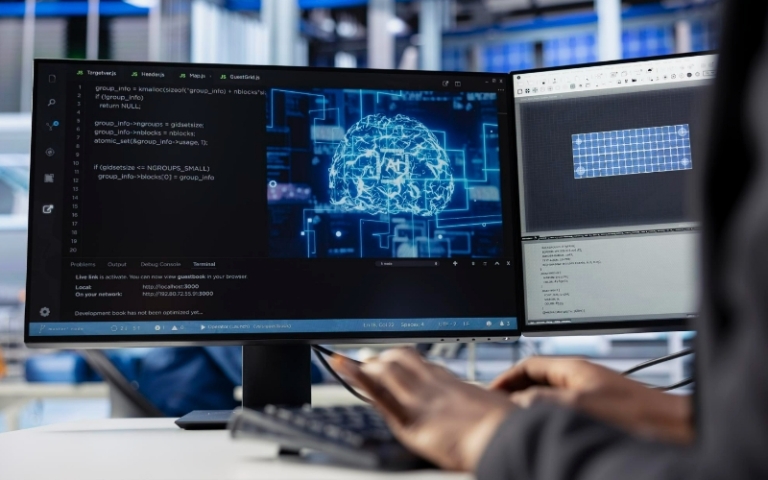
Sustainability innovation is not limited to physical products; the digitalization of processes is at the heart of this transformation. Managing complex sustainability data requires developing new methods in areas such as digital solutions, data analytics and automation.
CimpactPro is a critical digital partner driving innovation in this area:
Artificial Intelligence (EcoPilot):
CimpactPro's embedded AI, EcoPilot, speeds up data entry and reduces errors. This allows employees to focus on strategizing with insights from the data, rather than wasting time on manual data entry.
Integrated Data Management:
Gathering data from different ERP systems and IoT devices on a single platform strengthens the company's "data-driven" decision-making muscles. Instant monitoring and simulation capabilities enable managers to answer the question "What will our carbon footprint be if we make this investment?" in seconds, encouraging innovative investments.
4. Transformation in Corporate Culture: Problem Solving Capability
A culture of sustainability reinforces employees' problem-solving skills. questions such as "How can we reduce waste?" or "How can we do this process with less energy?" encourage employees to be more open-minded and think about the future. This creates an ever-evolving, dynamic innovation environment within the organization.
Conclusion
Sustainability is not just a passive practice that protects the environment. It is a powerful catalyst for innovation that encourages companies to constantly evolve, rethink and create more advanced solutions. This process, supported by digital tools such as CimpactPro, will position your company as a market leader not only for today, but for the future.